But I still love newspapers. Not just the abstract idea of newspapers and their worth to society, but the look and feel and even the smell of ink on newsprint.
I can get just as irritated as the next person at the failures of newspapers, the greed of their owners, and the idea that we readers should pay more for less.
But I really love the newspapers that blessed my life with challenge, adventure, a life-time occupation, support for my family, and great, interesting and quirky friends.
Here's a personal history of newspapers where I worked, grew up, matured and eventually retired.
The Atlanta Journal was the biggest paper in Georgia when I started there as an intern in 1961, a summer of turmoil and excitement, and it schooled me in essentials I never forgot. My teachers were some of the best reporters and writers in the South, all keen on finding out what was really going on and letting the public know in crisp clear language.
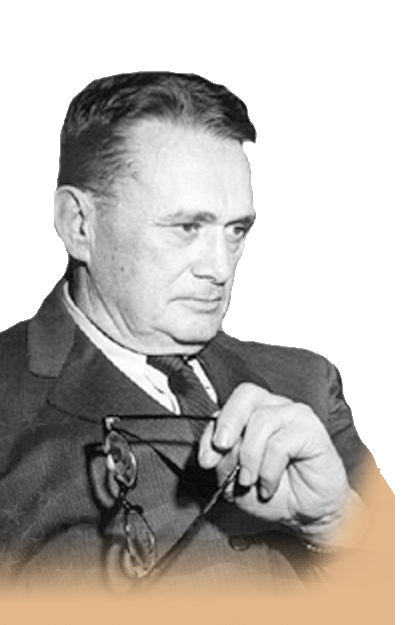 |
| Ralph McGill was the Journal-Constitution's voice for morality |
The Army required me next, but even then I worked nights as a cop reporter for the Columbus Ledger-Enquirer. I made enough money moon-lighting to buy a Gibson guitar, and went back to being a full time soldier at Fort Benning.
When I ended my tour, The Miami Herald -- then the biggest and best paper in a booming state -- called me to come work in their bureau system. My long-dead grandfather had worked there as a printer.
I was lucky beyond belief to be assigned to the Herald bureau on the East Coast closest to Cape Canaveral where world-changing events were in the works, and lucky to have editors who left me alone (so long as I produced stories, which I did every day) and trusted me.
 |
| The Herald's Bureau staff in 1966, with spouses |
I got engaged, accepted the new job and they gave me a week off to get married.
I was at the TODAY Newspaper (now re-named Florida TODAY) as Aerospace Writer, my very first title, and ended up writing about one of the biggest accomplishments in human history -- men on the moon -- for the Gannett chain of newspapers, a chain that grew into the biggest in the nation. I was even put on the corporate payroll, a nice way for the local editor to keep his costs down. And because I was in the right place, freelance writing offers came in almost daily from everywhere from the Washington Post Magazine to Paris Match.
As the manned space program wound down after Apollo ended, I was allowed to do more general science reporting, including ocean exploration, and that led me to the Virgin Islands, the Bahamas and elsewhere.
In early 1971 the company decided to open a Gannett News Service Bureau in the state capitol of Tallahassee, and I was tapped for that job. All of a sudden I was back to covering politics, but on a larger scale, traveling the state and the Southeast to cover news for seven newspapers. That led me to the political conventions of 1972 (McGovern and Nixon), and on the road with Southern governors named Wallace and Carter.
When you work for Gannett you never really unpack, so it was not a surprise that at the end of 1972 I was asked to go to the Fort Myers News-Press to work with my good friend Executive Editor Bob Bentley as his Managing Editor, and sooner than I expected as his replacement.
It does not do the paper and its people justice to skim over those years, but understand we were building and growing and doing our best work. In my early and mid 30s, I was leading a staff of bright and hard-working people. Those surviving, not on book tours and sober enough to travel show up for reunions almost 40 years later.
One of the verities of the newspaper business is that all editors serve at the pleasure of their publisher. I survived one publisher, but his replacement wanted an editor more cooperative with his business interest (and willing to ignore his greed).
I escaped to a sabbatical year at the University of Michigan as a National Endowment for the Humanities Journalism Fellow, and ended up after that as executive editor of the Marietta Times in Ohio. It was small town newspapering, more of a team playing together than workers. Everyone was underpaid and overworked and had a good time.
After 14 years with Gannett Newspapers, and moving six times, it was clear that a packed suitcase (and lots of publisher changes) would always be a requirement, no matter what your family situation. So when an unexpected call came from California to consider a different company, we put aside our West Coast biases and took a look.
I never really had heard much about the "Bee newspapers," much less considered working for a paper with an insect name. But when I checked out the man who made the call -- C.K. McClatchy -- his reputation was pure gold in West Coast journalism. He was president and editor of the company, but wanted an executive editor in Modesto. He offered professional integrity, no publishers in the system (I would report to him as CEO), and the first truly decent salary I had ever been offered.
It seemed too good to be true, but it was. I became the executive editor of The Modesto Bee, which turned out to be the longest tenured job ever for me, and a great opportunity.
During C.K.'s time the only problem I ever had was worrying why no one ever called from corporate to check up on Modesto's newsroom, or the content of the paper. I finally got up my courage to ask him and he told me he hired me to run the paper, not to be bugged by folks in the headquarters in Sacramento.

Change is the only constant in newspapers, and after 18 years as executive editor the company converted to a publisher top-down system, and the new publisher wanted a new editor.
I was offered a chance to go back to writing as Ombudsman for The Sacramento Bee. We left our long-time Modesto home, friends, church and neighborhood and moved into downtown Sacramento -- no commute required. I traded suits and ties and ten-hour days in six-day weeks for more relaxed garb, normal working hours for the first time in almost 40 years, and the job of being the readers' representative.
I wrote a column about the strengths and weaknesses of the newspaper, and rediscovered the joy of writing. I maintained the joy of talking with people -- both readers and staff -- about what makes good journalism.
In my new spare time we took up sailing, which has led to all sorts of good times and friends.
Finally, 43 years after walking into that first newspaper job, I decided to step aside, try new things, and give other people a chance to be as lucky as I had been.
It was an accident that I retired just before the industry began to collapse.
I was one of the lucky people in many ways.
How many people you know get to work their entire career with people they trust?
How many people get look back with affection at every place they worked, and recall it with fondness and a sense of satisfaction?
My friend and mentor John Quinn, a great American editor, was right when he said working for a newspaper is the most fun you can have with your clothes on.
My friend and mentor C.K. McClatchy, a great American newspaper owner and editor, was right when he said newspapers owe the public uncompromised honesty and independence from the influence of anyone who wants to hide the truth.
I still love newspapers.
Now newspapers are going digital. I always wanted to be cremated and have my ashes mixed into the giant inkwell of black ink that prints the words on the pages of your newspaper. That won't happen.
I still love newspapers.

